

AI Streaming Scandal: Bots Are Farming Spotify Royalties
30th January
Welcome to The Aigency Works Dispatch, your backstage pass to what's fresh, fascinating, and flying off the innovation shelves in the world of AI. From breakthrough tools to bold new use cases, we're serving up bite-sized updates to keep you (and your Aigents) ahead of the curve. Let's dive into what made waves this week
Streaming Bots?
Federal prosecutors have charged a man in North Carolina with running one of the largest streaming fraud schemes ever linked to AI-generated music. According to court filings, he used AI tools to create hundreds of thousands of tracks, uploaded them to major platforms, and then deployed automated bot networks to play them billions of times. The goal was simple: trigger royalty payments at massive scale. Investigators estimate the scheme generated millions in fraudulent revenue, exploiting how streaming services calculate payouts based on play counts rather than verified listeners.

This case exposes a structural weakness in the modern music economy. AI did not invent fraud, but it has industrialised it. What once required teams of people can now be run by one person and a few scripts. The danger is not just financial. It risks flooding platforms with low-quality, synthetic content that drowns out real artists. If left unchecked, discovery becomes meaningless and trust collapses. Streaming only works when listeners believe they are supporting musicians, not gaming algorithms. This is a warning shot. Platforms will need smarter detection, stronger verification, and probably new payment models, because the era of “play equals value” is officially under pressure.
Strike a Pose
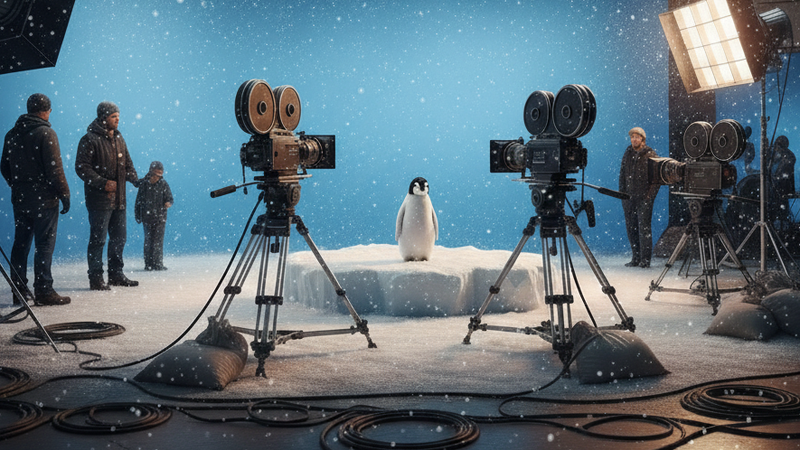
Camera angles are no longer fixed. Higgsfield.ai has released Angles, a new AI tool that lets users change the viewing angle of an image after it has already been taken. Instead of reshooting or rebuilding a scene in 3D software, creators can now rotate, tilt, and reposition the camera digitally. The system reconstructs depth and perspective using generative models, producing new viewpoints that look convincingly real. For filmmakers, photographers, marketers, and designers, this removes one of the biggest practical constraints in visual production.
This is creative freedom with a small side of existential dread. On one hand, it is brilliant. Missed the perfect angle? No problem. Need a product shot from above? Done. It lowers barriers and speeds up production dramatically. On the other hand, it blurs the line between captured reality and generated reality even further. When any image can be reshaped after the fact, “this is what happened” becomes harder to prove. As with most AI tools, the power is neutral. The impact depends entirely on how responsibly it is used. In the right hands, this is a creative multiplier. In the wrong ones, it is another way to rewrite reality.
Eyes and Ears
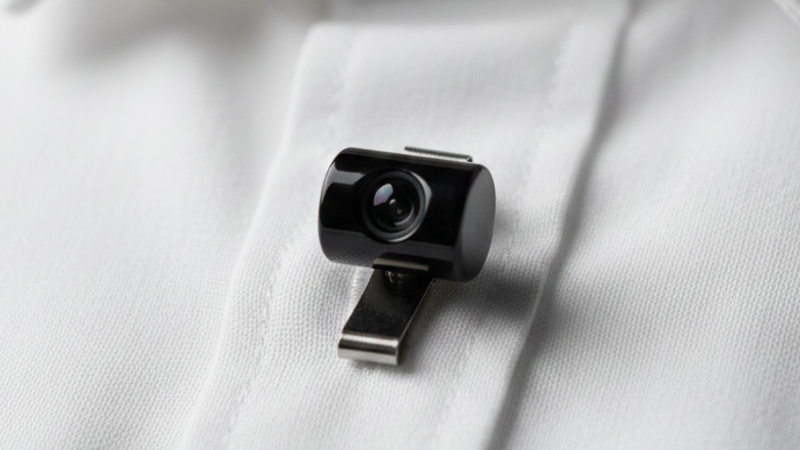
Apple is reportedly developing a clip-on AI pin for release around 2027. The device, roughly the size of an AirTag, is designed to attach to clothing and continuously hear and see the world around you. It would use onboard AI to provide contextual assistance, memory support, and real-time insights, without needing a phone screen. Internally, Apple is said to be targeting sales of around 20 million units in its first year, suggesting serious confidence in demand. If accurate, this would be Apple’s boldest wearable experiment since the Apple Watch.
But this one deserves caution. A device that listens and observes constantly is not just a gadget. It is a social statement. Do we really want a future where millions of people are walking around with always-on microphones and cameras pinned to their clothes? Even if Apple handles data responsibly, perception matters. Trust matters. Consent matters. This risks normalising ambient surveillance in everyday life, even when no one intends harm. Convenience is seductive, and Apple is very good at making intrusive technology feel elegant. The question is not whether they can build it. It is whether we should be eager to wear it.