

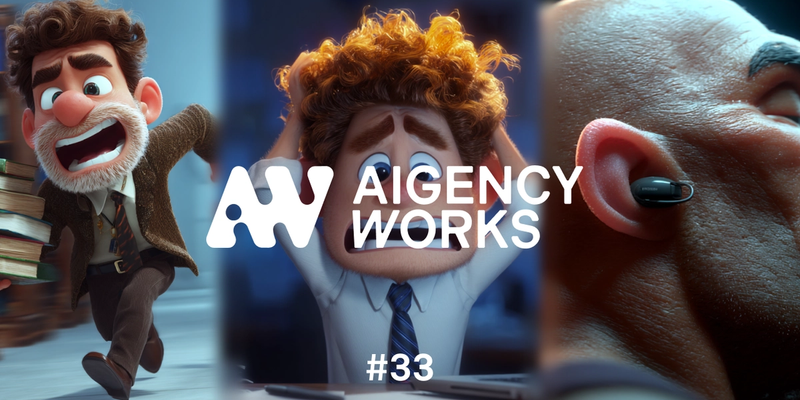
Unskippable AI Ads, OpenAI's Listening Device, and the Book Piracy Fight
23rd January
Welcome to The Aigency Works Dispatch, your backstage pass to what's fresh, fascinating, and flying off the innovation shelves in the world of AI. From breakthrough tools to bold new use cases, we're serving up bite-sized updates to keep you (and your Aigents) ahead of the curve. Let's dive into what made waves this week
Unskippable AI
OpenAI is preparing to introduce advertising into ChatGPT, marking a big shift in how the product is funded and how users experience it. Until now, ChatGPT has felt relatively clean and neutral, powered by subscriptions, enterprise deals, and big infrastructure partnerships. Ads change that dynamic completely. Early reports suggest the advertising will be subtle and context-aware, more like “sponsored suggestions” than banner chaos, but the direction is clear. ChatGPT is becoming a platform, not just a tool. When something reaches that scale, monetisation always follows. With hundreds of millions of weekly users, even a light ad layer turns into an enormous commercial opportunity.

This is where things get delicate. ChatGPT works because people trust it. They treat it as a thinking partner, not a sales channel. Once advertising enters the chat, even softly, the question of neutrality gets louder. Is this answer genuinely the best option, or is it the one someone paid for? That shift matters. It does not mean the product is ruined, but it does mean its relationship with users changes. We are watching AI step into the same phase social media hit years ago, where usefulness meets monetisation. The challenge will be keeping the experience helpful without making it feel transactional. Trust is fragile, and ads have a habit of testing it.
OpenEar-I

OpenAI is preparing to announce its first-ever hardware device in the second half of 2026, following its acquisition of Jony Ive’s startup, io. That alone is enough to turn heads. Ive is the design mind behind some of Apple’s most iconic products, so his move into AI hardware signals serious ambition. According to Asian supply-chain leaks, the first device could be a screen-free, AI-powered, ear-worn product internally codenamed “Sweet Pea”. Think less smartphone, more ambient companion. A device that listens, speaks, and assists without pulling you into another glowing rectangle.
This is a bold play. Screens dominate our lives already, so the idea of removing one feels both refreshing and risky. A screen-free AI suggests something more conversational, more present, and potentially more intrusive. If your assistant is always in your ear, the line between helpful and overwhelming gets thin fast. But if anyone can make invisible technology feel elegant, it is the Apple design school. This feels like OpenAI saying it does not just want to live inside devices. It wants to be the device. If Sweet Pea lands, it could redefine what personal computing looks like in an AI-first world. Quiet, constant, and always listening.
The Book Thief

Court filings reported by TorrentFreak claim Nvidia may have reached out to Anna’s Archive, a massive library of pirated books, to explore paid, high-speed access to around 500TB of data. Internal messages allegedly warned the content was illegal, yet discussions continued. If true, this would suggest one of the world’s most powerful AI infrastructure companies was at least curious about using pirated material to fuel model training. Nvidia has not confirmed the claims, but the documents have reignited a familiar debate about where AI training data really comes from.
This is the uncomfortable side of the AI boom. Models need enormous amounts of data, and high-quality text is one of the most valuable resources on earth. Books are gold. They are structured, thoughtful, and information dense. But they are also protected. When the race is moving this fast, ethical lines start to blur. This is not just about legality. It is about precedent. If the biggest players are willing to even flirt with pirate sources, it tells you how intense the data hunger really is. AI might feel futuristic, but its foundations are deeply old-fashioned. Content, ownership, and who gets paid for knowledge still matter.