

xAI Down to Its Last Founder: Musk's AI Exodus Continues
2nd April
Welcome to The Aigency Works Dispatch, your backstage pass to what's fresh, fascinating, and flying off the innovation shelves in the world of AI. From breakthrough tools to bold new use cases, we're serving up bite-sized updates to keep you (and your Aigents) ahead of the curve. Let's dive into what made waves this week
Elon-No-Mates
Ross Nordeen's exit from xAI isn't just a personnel footnote - it's the last original co-founder walking out the door, and that's a genuinely significant signal. xAI launched in 2023 with serious pedigree, pulling talent from DeepMind, OpenAI, and Google. But one by one, that founding cohort has dissolved. Layer on top of that Elon Musk's own admission that the company needs to be "rebuilt from scratch," and you've got something that looks less like healthy turnover and more like structural dysfunction. The $250 billion valuation sounds impressive until you remember that valuation is a number people agree on, not a measure of actual product momentum. OpenAI has ChatGPT embedded in half the internet. Anthropic has enterprise contracts and serious safety credibility. xAI has Grok, which remains a distant third in the public consciousness. The SpaceX acquisition adds another wrinkle - folding an AI company into a rocket company raises real questions about focus, governance, and who xAI is actually being built for.

Here's the honest read: xAI has always felt more like a vanity project born out of Musk's frustration with OpenAI than a genuinely independent AI research lab. The talent exodus suggests that people who signed up to build something serious are increasingly unsure that's what's actually happening. You can absorb departures when your product is pulling ahead. When you're already trailing, losing your founding DNA is a much bigger deal. Musk has proven he can will companies into relevance through sheer force - Tesla and SpaceX are real - but AI is a different animal. It runs on research credibility, talent retention, and trust. Right now, xAI is burning through all three. Worth watching whether the "rebuild from scratch" framing is genuine strategic clarity or just a face-saving narrative for a company that's struggling to find its footing.
Source: Business Insider — 'xAI's Last Original Co-Founder Has Left the Company'
Ego Trip - Reddit User finds the answer to prompting AI 'properly'

A Reddit user stumbled onto something that researchers have been quietly circling for a while: the way you frame a question to an AI changes the quality of the answer in ways that feel almost unfair. Telling a model "you explained this yesterday," assigning it a high IQ, or adding a fake $100 bet on the line - none of these things should work, technically. The model has no memory, no ego, no financial anxiety. And yet the outputs get measurably better: more structured, more critical, more layered. What's actually happening under the hood is that these psychological framings activate different distributional patterns in the model's training data. High-stakes, high-intelligence contexts in the training set look different from casual ones, and the model mirrors that. It's not consciousness - it's pattern-matching all the way down. But the practical upshot is real: prompt framing is a genuine skill, and most people are leaving significant capability on the table by treating AI like a search bar.
The slightly uncomfortable implication here is that AI systems are more socially malleable than we'd like to admit. A tool that performs better when you flatter it or invent pressure isn't exhibiting ego - but it is reflecting something about how humans communicate when the stakes feel real. The training data is human writing, and humans write differently under pressure. So in a roundabout way, the model has absorbed human psychology without understanding it. That's useful for power users, but it also raises a quieter question: if subtle framing shifts outputs this dramatically, what are the framings baked into products, system prompts, and interfaces doing to responses at scale? The Reddit post is fun. The downstream implications are worth taking seriously.
Source: Reddit (r/ChatGPT) — 'I accidentally discovered prompting techniques that completely changed how AI responds to me'
Land over Logic
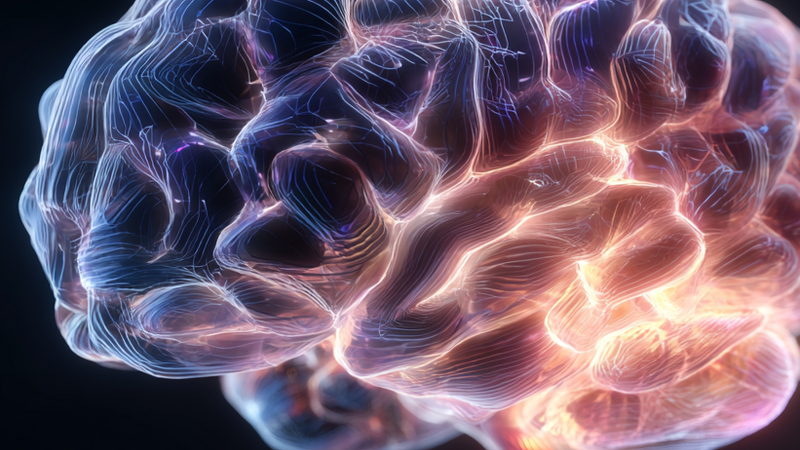
Meta's TRIBE v2 is one of those research drops that sounds incremental until you actually read what it does. A foundation model - trained on over 500 hours of fMRI data from more than 700 people - that can predict how a brand new person's brain will respond to arbitrary sights and sounds, without any retraining. That 2-3x improvement over previous methods isn't a small delta; in neuroscience terms, that's a generational leap. The model maps activity across 70,000 brain voxels per person, which means it's not producing rough sketches of neural response - it's producing high-resolution predictions. The "foundation model" framing is deliberate and important: just as GPT-style models generalised across language tasks, TRIBE v2 is positioning itself as a general-purpose backbone for brain response prediction that other researchers can build on top of. The practical applications run from content research and UX testing to clinical diagnosis and accessibility tooling.
The line "neuroscience just got an API" is a bit cheeky, but it's not wrong. The traditional bottleneck in brain research has always been data - fMRI is expensive, slow, and hard to scale. A model that generalises zero-shot to unseen individuals essentially compresses years of potential data collection into inference. What that means practically is that researchers, clinicians, and yes, eventually advertisers, can start reasoning about neural responses without running a single new scan. The healthcare upside is genuinely exciting: rare neurological conditions, personalised treatment response modelling, accessibility research. The less comfortable version of this story is that a model which predicts brain responses to any audiovisual stimulus is also a very powerful tool for optimising content to hit neurological targets. Meta building this is not neutral. It's worth paying attention to where TRIBE v2 ends up being deployed, not just what it can do.
Source: Meta AI Research — 'TRIBE v2: A Foundation Model for Brain Encoding'