

Your Brain Beats AI on 12 Watts, ChatGPT's App Takeover, California Deepfake Law
10th October
Welcome to The Aigency Works Dispatch, your backstage pass to what's fresh, fascinating, and flying off the innovation shelves in the world of AI. From breakthrough tools to bold new use cases, we're serving up bite-sized updates to keep you (and your Aigents) ahead of the curve. Let's dive into what made waves last week
12-Watt Wonder
Here’s a fun fact to melt your mind: your brain runs on about 12 watts of power - less than a dim bedside lamp. Meanwhile, the AI systems trying to mimic it? They chew through roughly 2.7 billion watts. That’s a tiny bit more than your morning espresso. The reason is simple: your brain is the product of evolution’s finest engineering - 86 billion neurons firing in perfect parallel, learning, adapting, and rewiring themselves in real time. AI, by comparison, is like a toddler with a jet engine: all power, not much finesse. It needs huge data centres, oceans of cooling, and constant electricity just to keep up.
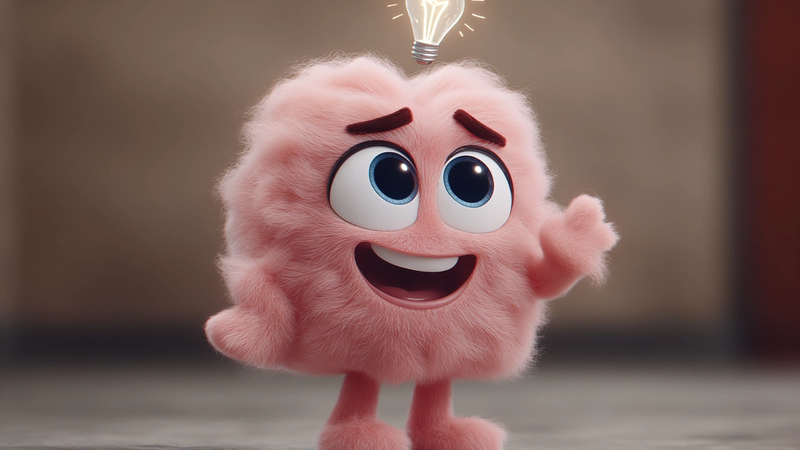
And yet, here we are - still smarter, faster, and infinitely more creative. The push towards neuromorphic computing (machines that think more like we do) might narrow the gap one day, but for now, nature’s hardware still wins. So while AI keeps scaling up, remember this: your brain can imagine, empathise, and innovate on 12 watts. You’re running the most advanced processor on the planet - and it fits neatly inside your head.
One Chat to Rule them All
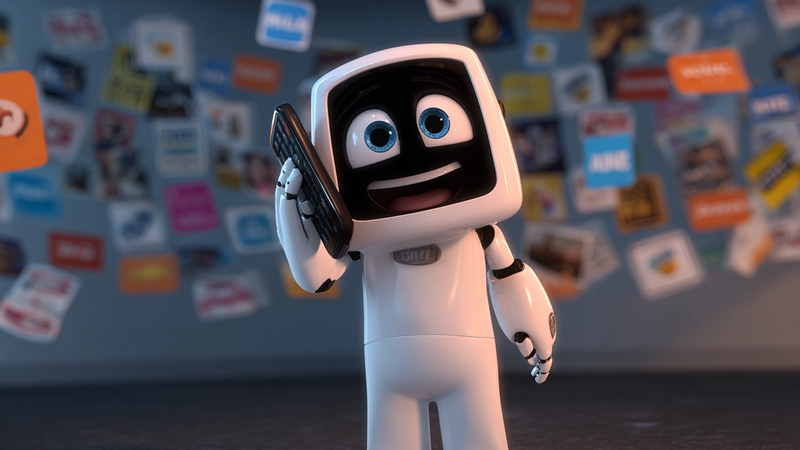
ChatGPT just levelled up - and it’s officially learned how to talk to your apps. Think of it as giving your favourite AI a backstage pass to your digital world. Instead of flicking through endless tabs, you can now ask it to create a playlist on Spotify, design something in Canva, or even book a hotel in Lisbon - all without leaving the chat. OpenAI’s latest update turns ChatGPT into a kind of universal remote for your apps, connecting it to tools like Figma, Expedia, and Google Drive. It’s a clever move that could make day-to-day tasks faster, smoother, and far more intuitive.
Of course, not everyone’s convinced. The idea of one AI sitting between you and all your data raises new questions about privacy, control, and how much we’re willing to hand over to automation. If everything runs through one chat window, what happens when that window gets something wrong? Still, it’s hard not to see the appeal. Talking to your tools feels effortless - almost futuristic. It might blur the line between assistant and operator, but for many, that’s exactly the point. Tech is finally starting to sound a little more human… even if it’s quietly taking charge behind the scenes.
The Hollywood Face-Off

California’s drawn a line in the digital sand. Governor Gavin Newsom just signed a law making it illegal to replace an actor’s face or voice with AI without their consent. In a state built on movie magic, that’s a big deal. It comes after months of tension between Hollywood creatives and tech studios experimenting with deepfake doubles - scanning performers once and reusing them forever. We covered this when we introduced Tilly Norwood, the world’s first fully AI actress. Back then, the question was: how long before synthetic talent goes mainstream? Now, California’s made its stance clear - not on our watch.
But this isn’t the end of the story, it’s the start of a new phase. The law protects human likeness, but it doesn’t halt AI entirely. Studios can still use generative tools for animation, editing, and performance enhancement - they just can’t replace the human at the centre. It’s a reminder that creativity isn’t just data and pixels; it’s identity, consent, and craft. For now, the real stars still have the final say - and maybe that’s how it should be. After all, AI might imitate a face, but it can’t fake a soul.